The Havana issue
Where to Stand Above Havana and See It Whole
Nine rooftops, two forts and a pair of empty hilltops, ranked by what each one shows you, with prices, opening hours and the door realities that decide your evening.
By Oliver NashReading Havana barrio by barrio
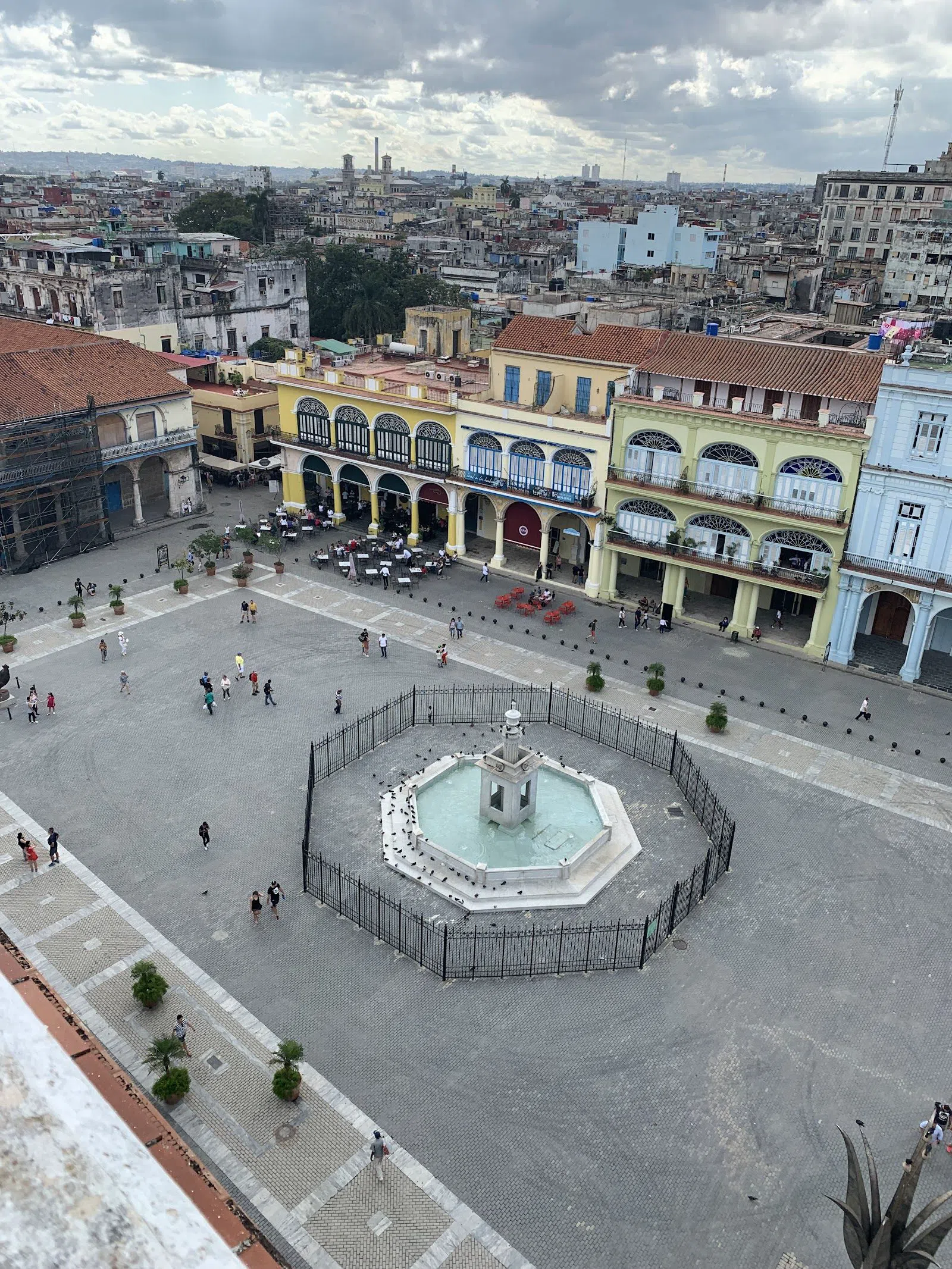
Havana is a low city, and that is exactly why height pays here. Nothing modern has been allowed to grow tall enough to break the line, so from four or five storeys up the whole thing resolves at once: flat tar roofs with their black water tanks, colonnades running away in straight lines, the harbour curling in behind two Spanish forts. The questions worth asking are which perch shows which part of the city, what it costs, and whether the lift is running that day.
Old Havana at close range
Begin in the middle of it rather than above it. Cámara Oscura sits in the tower on the northeast corner of Plaza Vieja, in Old Havana, and it is the one viewpoint in the old town where somebody talks you through what you are looking at while it moves. A periscope lens on the roof throws a live image of the surrounding streets down onto a white dish in a darkened room, and the guide pans it across the tiled square below, over the dome of the old stock exchange and out to the bay, narrating as laundry moves on a line and a bicitaxi turns a corner three blocks away. Entry runs about 75 CUP, roughly US$3, which makes it the cheapest orientation lesson you will get. The room only holds about a dozen people, so a party of twenty goes up in two consecutive sessions; a guide can book the slots ahead, and it is worth doing rather than standing on the stairs. Stay for the open terrace afterwards, which is the cleanest close-range look down over Plaza Vieja's tiles.
Five minutes north, on Obispo, the rooftop of Hotel Ambos Mundos gives you the tightest view of the colonial core: cathedral towers, the Capitolio dome further off, the harbour beyond the rooflines. This is Hemingway's old hotel, reopened in 2023 after a long closure and back in full service, and the roof bar and restaurant take non-guests without ceremony. You can walk in. Coffee starts at a couple of dollars and cocktails sit around US$5 to US$10. Come in the morning. By late afternoon Obispo has filled and the roof fills with it, and the light has swung behind the buildings you want to be looking at.
Plan your Havana trip
Live prices from our booking partners.
Free cancellation on many rooms. We may earn a commission when you book.
The forts across the harbour mouth
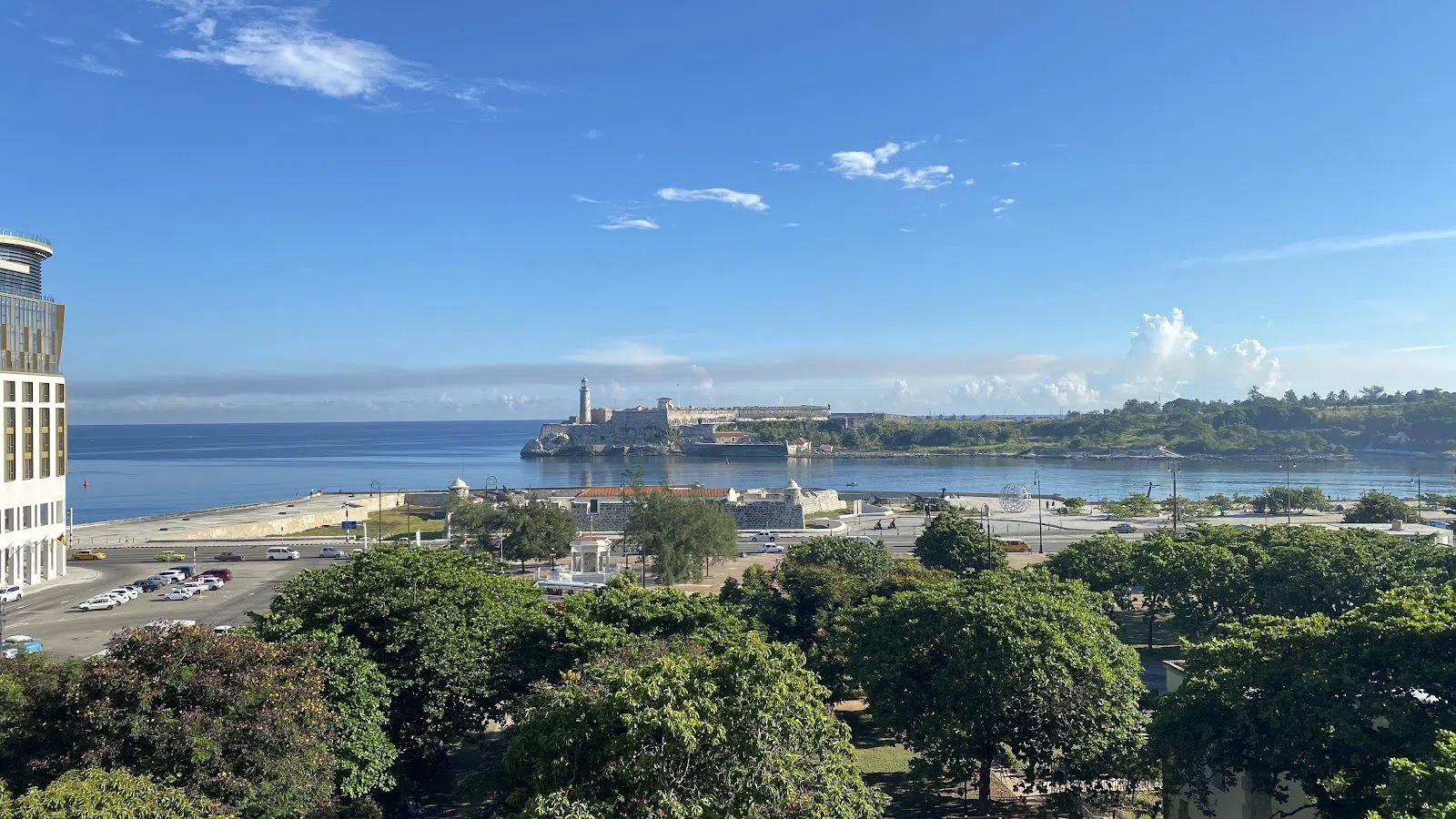
The two great Spanish fortifications sit opposite the old town, and between them they own the postcard angle back at the city. Castillo de los Tres Reyes del Morro is the one you have already seen in photographs, on the headland where the harbour narrows, and its lighthouse is the tightest, highest perch anywhere over the harbour entrance. General admission is 300 CUP, about US$12 for foreign visitors, with a small extra charge for the lighthouse climb. It opens daily, roughly 10am to 7pm, and it is entirely used to tour groups. The lighthouse is a different proposition: guided batches of a few people at a time, hours that vary with staffing, and a steep, narrow stair with no comfortable place to change your mind halfway. Ask at the gate whether climbs are running before you commit to the walk over. Anyone unsteady on stairs should be honest about it and stay on the ramparts, which are hardly a consolation prize.
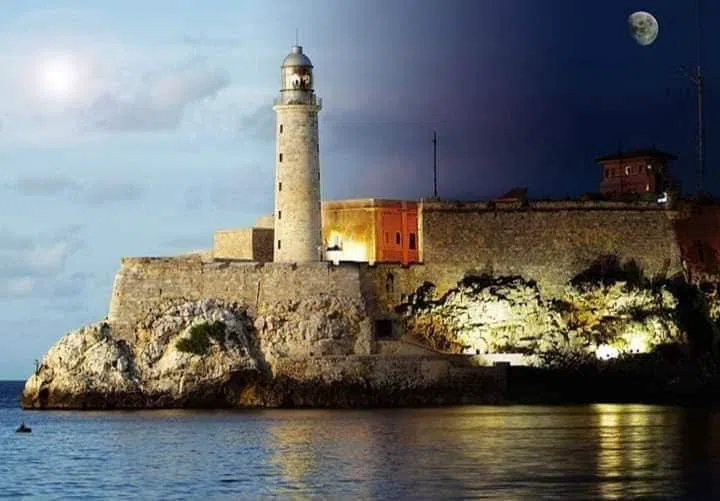
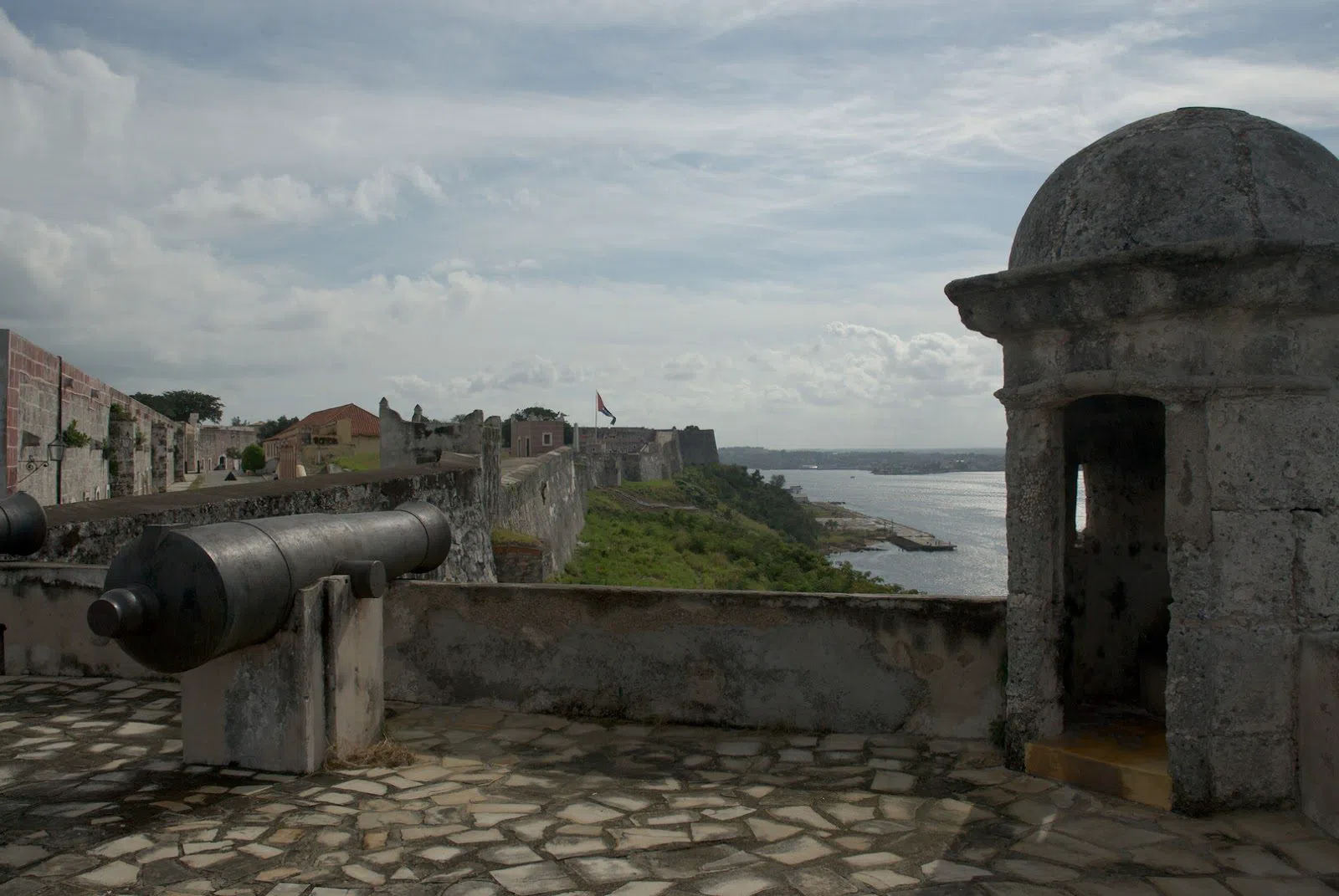
Next door, Fortaleza de San Carlos de la Cabaña is the largest-capacity viewpoint in the city and the best late view in Havana. Coach parties, families and school groups all spread along its ramparts without anyone feeling crowded, and entry is around 300 CUP. Go for the evening. You want to be inside by 8.30pm, on the wall facing the water, as the city switches on across the harbour: Old Havana first, then the ridge of Centro Habana behind it, patchy where the power is patchy. At 9pm sharp, soldiers in eighteenth-century uniform fire the cannon, a ceremony that has been kept up for centuries and is still not remotely a tourist pantomime. It is loud. Warn children.
Two hills that most itineraries skip
Across the water at Casablanca, Cristo de La Habana is the cheapest great view in the city and, for my money, the most useful one. The statue stands on the hillside above the little ferry landing, and from its feet you can finally see how Havana is put together: the bay as a proper enclosed harbour rather than a shape on a map, El Morro guarding the neck of it, the old town stacked up on the far shore. It is free, it is unenclosed, and any size of group works. The constraint is the crossing: the Casablanca ferry from Emboque de Luz takes limited numbers for a few CUP each way, so a large party crosses in waves. The walk up from the landing is short and steep, with no shade at all, so do it early or late rather than at one in the afternoon.
One ferry stop further round, Colina Lenin is the view nobody sells you. It is a public park on a hill above Regla, free, unticketed, and nearly always empty. What it shows is the working harbour that no rooftop bar can offer: cranes, fuel tanks, the container quay, tugs pushing a hull around, with the city laid out beyond as a backdrop rather than the subject. The drawbacks are real. It is about 1.5 km uphill from the Regla ferry, and there are no facilities of any kind at the top, no café, no shade. Bring water, and put anyone less mobile in a taxi from the landing rather than making a virtue of the climb.
The one lookout that shows the whole city
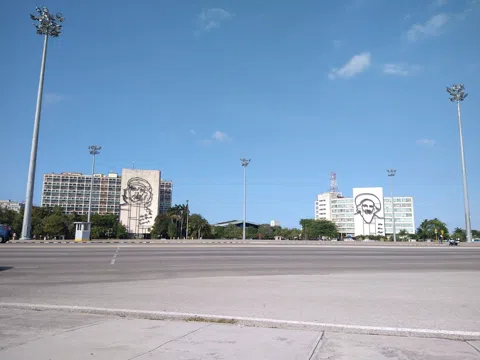
Every other viewpoint here shows you the seafront or the old town. The Memorial José Martí lookout, in Plaza de la Revolución in Vedado, shows you the rest: the flat grey-green sprawl running inland for miles, which is where most of Havana actually lives. At 129 m it is the highest publicly accessible point in the city, and the difference in what you understand from up there is worth the trip out. It opens Monday to Saturday, 9.30am to 5pm; entry is roughly US$5 with about US$2 more for the lift. The lift is small, so groups go up in batches and coach parties can mean a wait at the bottom. Ask whether it is running before you pay. That is the standing caveat with this building, and the stairs are not an option.
Rooftops over Centro Habana
Centro Habana's roofs give you the city at close quarters, which is a different pleasure from a panorama. La Guarida put its Bar Mirador on top of the crumbling mansion that houses Havana's most famous paladar, and the view is the reason to go up rather than a bonus attached to dinner: a low, intimate sweep across Centro Habana's rooftops, water tanks, washing lines and all, with the sea as a strip at the back. Cocktails run about US$8 to US$12; dinner downstairs costs considerably more. Reserve ahead, and definitely reserve for six or more, because the rooftop is compact and a queue forms on the staircase at sunset.

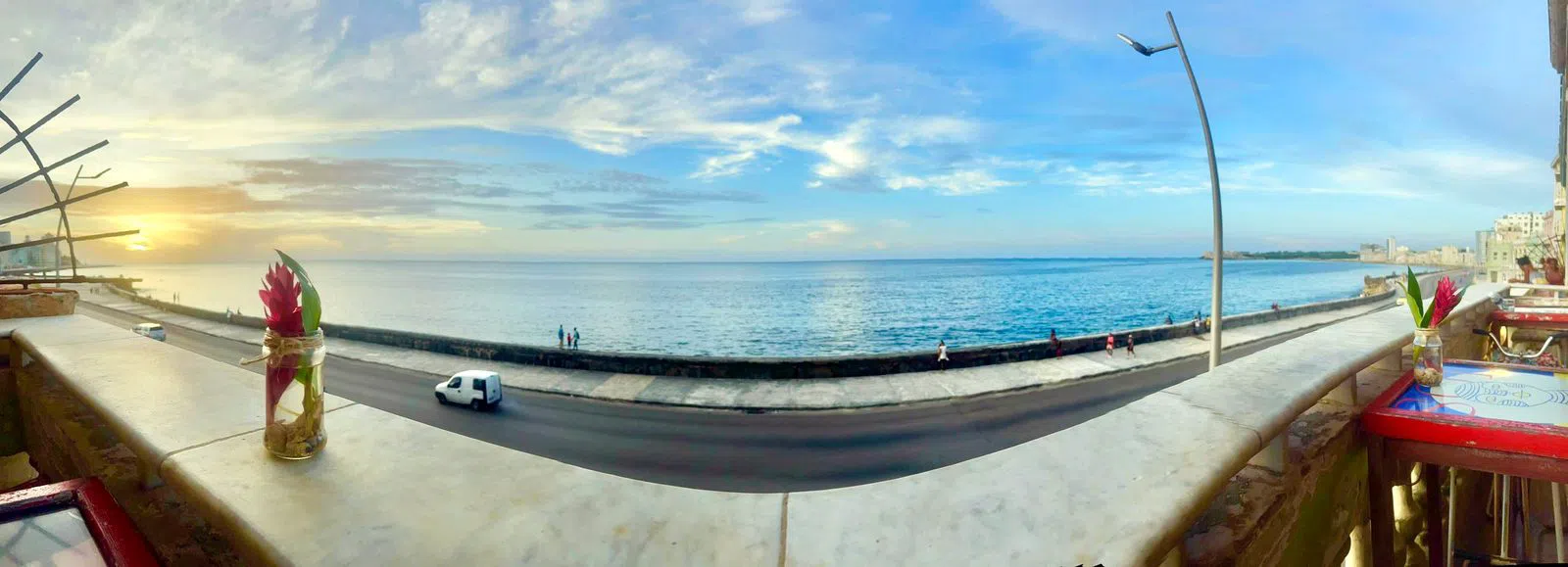
A few blocks north on the seafront, Malecón 663 has the most direct sunset-over-the-water view in the city: no intervening buildings, just the sea wall, the traffic and the horizon. It is a small boutique hotel with a casual roof terrace that takes walk-ins, cocktails around US$6 to US$10, and live music several nights a week, mostly Latin jazz and Cuban sets. The terrace really is small. A group over about eight should call ahead or accept standing.
Hotel roofs around Parque Central
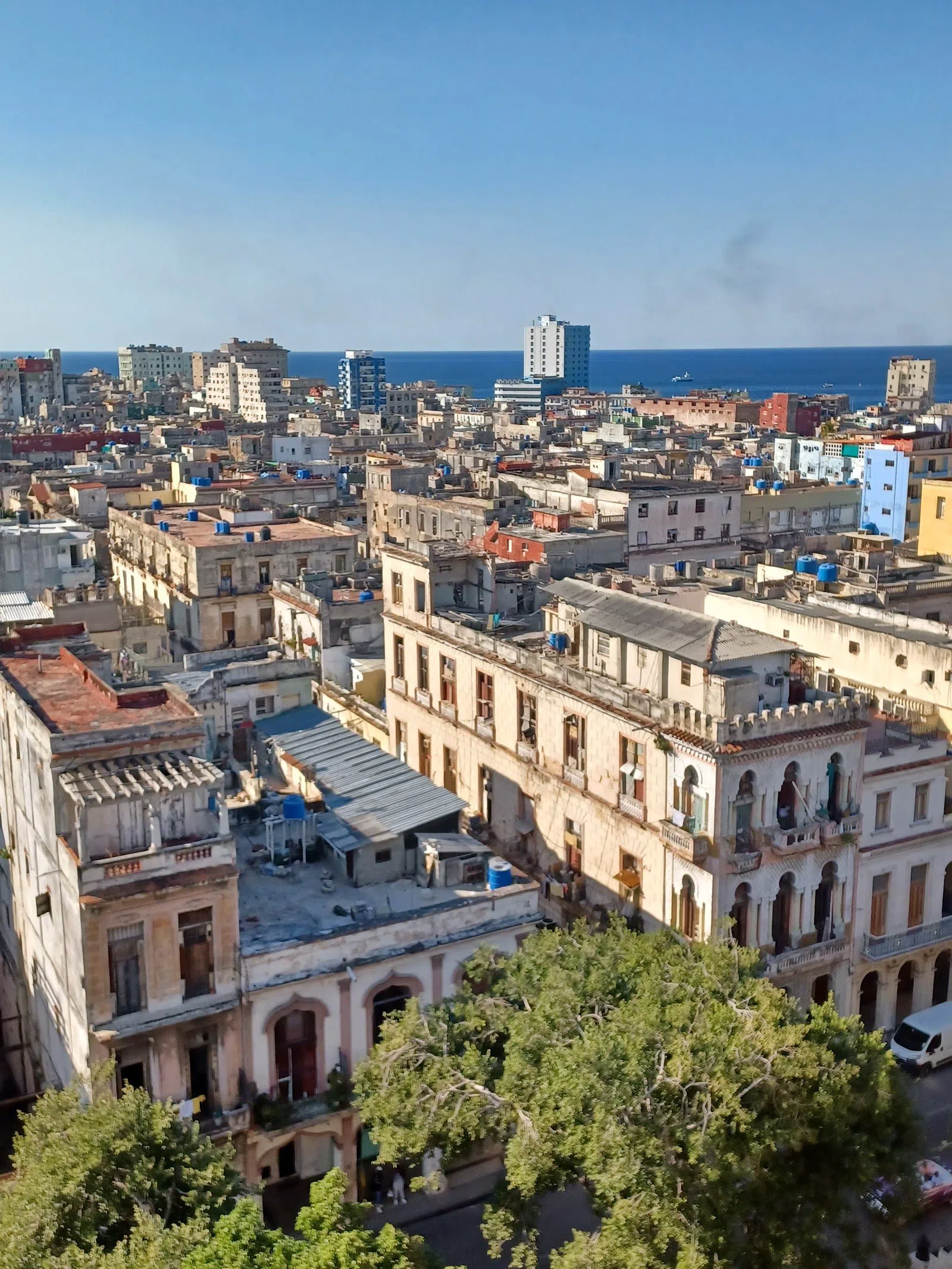
Three of the city's best hotel terraces stand within a few minutes of one another, and they are not interchangeable. Hotel Parque Central, on the square it is named for at the edge of Old Havana, gives you the Capitolio dome at eye level, which no other roof does as squarely. The bar and restaurant take non-guests and groups; the pool is for hotel guests only, so plan a drinks visit and not a swim. Drinks run roughly 200 to 500 CUP. One booking note that trips people up: Iberostar ended its Cuban management in 2026, so ask for it as Hotel Parque Central, because the old brand name on older listings is out of date.
Hotel Grand Packard, a short walk along the Prado, has the sixth-floor pool terrace with the best sightline in the city to El Morro and the harbour mouth from a comfortable chair. The rules are the same: the rooftop bar and restaurant serve non-guests, groups are fine with a booking, the pool is reserved for guests. Cocktails run about US$8 to US$12. It also lost the Iberostar name when the company left Cuba in 2026 and now trades simply as Hotel Grand Packard.
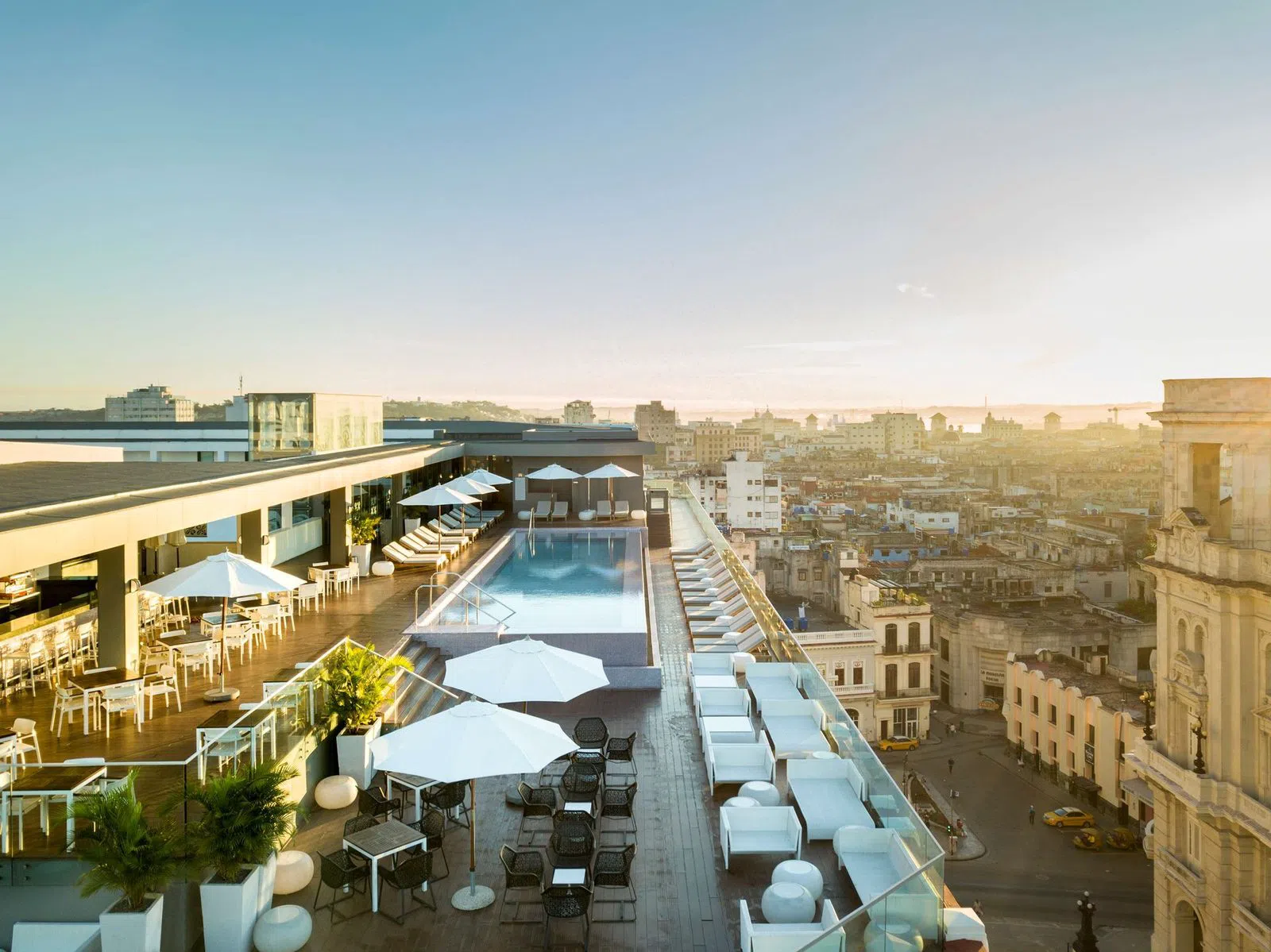
Gran Hotel Manzana Kempinski La Habana, facing the Gran Teatro, is the most polished rooftop in the city and the closest you will get to that theatre's carved stonework without a ladder. The terrace and bar are open to non-guests and are best reserved; drinks run about US$10 to US$15, and payment is by card only, which is a genuine planning point in a city where you will otherwise be carrying cash. The pool caps at around 40 people and is for hotel guests. Travellers from the United States should know that this property sits on the prohibited accommodations list and they cannot stay here. The rooftop, which is what most people come for anyway, is a separate matter.
Vedado's high windows
On the 33rd floor of the FOCSA building, La Torre holds the best window seat in Havana. Vedado's grid, the bay and the open Atlantic arrive in a single sweep, and at that height on a clear evening you can follow the coastline until it dissolves. Reservations are essential for the restaurant, where mains run about US$22 to US$28; the bar takes walk-ins, and the bar alone justifies the lift ride if you do not want a full dinner. Groups up to about ten are routine, larger parties need notice, and the whole place is closed on Mondays.
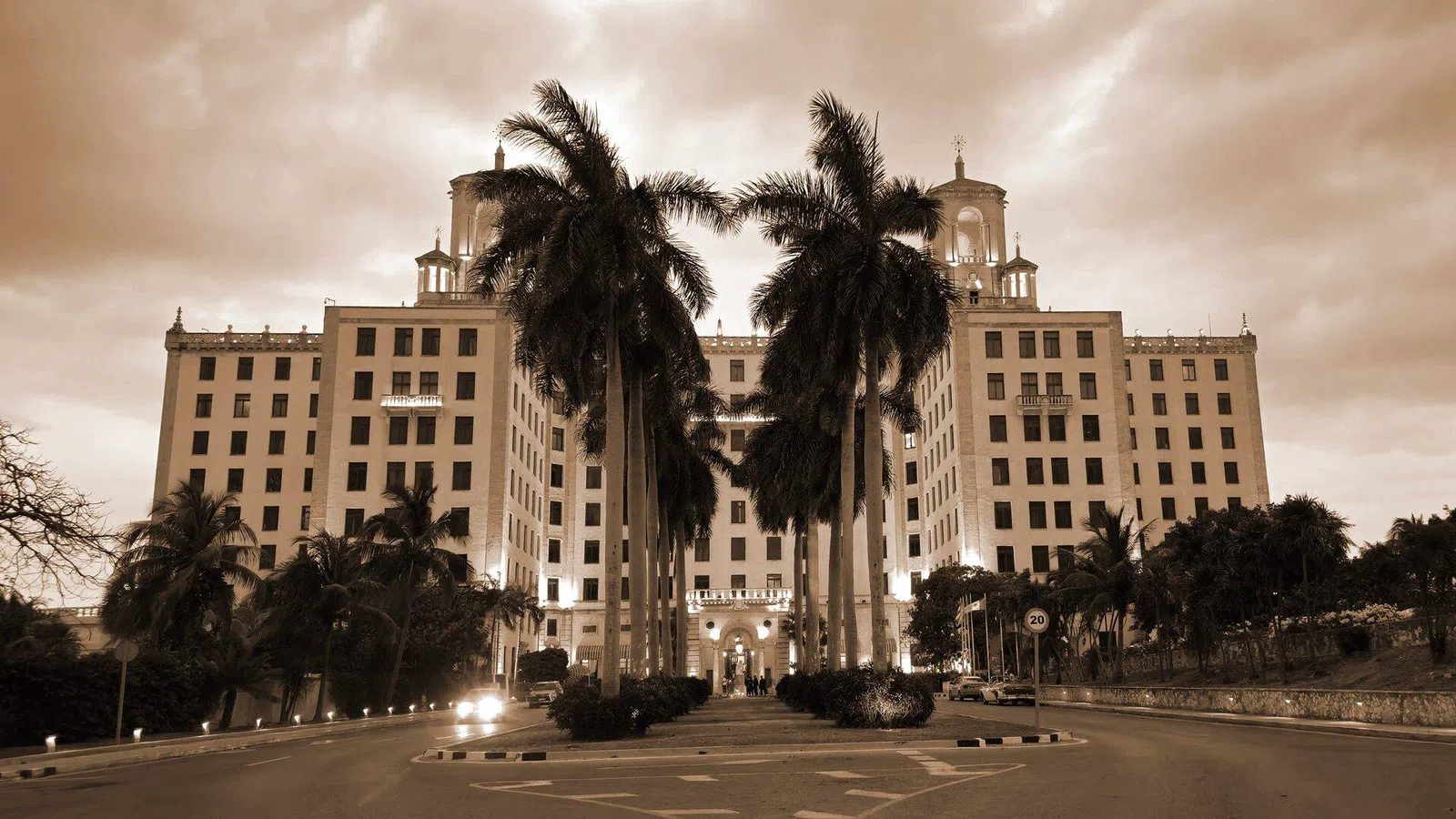
Finally, the most dependable view in the city, which is not the highest one. The clifftop terrace and gardens at the Hotel Nacional de Cuba, above the Malecón in Vedado, look east along the seafront toward the old town, and because the hotel is prioritised for generator power the terrace stays open and lit on evenings when much of the surrounding city is dark. That reliability matters more than an extra twenty metres of altitude. The garden terrace is large, walk-ins are welcome, and it handles tour parties daily without losing its composure. Cocktails and coffee run roughly US$5 to US$10.
Putting them in an order
Two days covers all of it comfortably. On the first, do Old Havana on foot: Cámara Oscura mid-morning, Ambos Mundos for coffee, the Kempinski or Parque Central terrace for a drink when the heat peaks. Then take a taxi through the tunnel in the late afternoon for El Morro's lighthouse and stay on at La Cabaña for the 9pm cannon. On the second, take the ferry to Casablanca for the Cristo early, cross to Regla for Colina Lenin if you want the working harbour, and spend the afternoon in Vedado between the Martí lookout and the Nacional's gardens, finishing at La Torre. If you would rather stack the walkable roofs, base yourself around Parque Central or the Prado, where the Havana hotel search covers those blocks, and read the wider Havana guide for what sits between them at street level.
Before you go up
Transport is simple and cash-based. The harbour ferries from Emboque de Luz to Casablanca and Regla cost a few CUP each way and run frequently; classic-car taxis and modern private taxis both work for the fort side through the tunnel, and you should agree the fare before getting in, including the wait if you want the driver to bring you back after the cannon. Taxis are the sensible answer for Colina Lenin and for Plaza de la Revolución.
Carry cash. Small entry fees (Cámara Oscura, the forts, the Martí lift, the ferries) are quoted and paid in CUP, and hotel bars quote in dollars or CUP depending on the house. The Kempinski is the exception that takes cards only; assume everything else does not. Bring smaller notes than you think you need.
On timing, mornings belong to the old town roofs, when the light is on the buildings and the crowds have not arrived. Late afternoon into dark belongs to the forts and the western-facing terraces. Power cuts are a fact of the city rather than an emergency, and they shape the evening view, which is the honest argument for the Hotel Nacional and for hotel roofs generally when you want a guaranteed lit terrace.
Budget roughly: under US$5 gets you Cámara Oscura or a ferry crossing and a hill; US$5 to US$12 covers the Martí lookout or either fort; US$10 to US$30 buys an evening on a good roof with a couple of drinks; US$60 or so covers dinner with the window seat at La Torre. The cheapest view in the city, from the feet of the Cristo, is also the one that will make the most sense of everything else you climb.
Before you go
What is the highest viewpoint in Havana you can actually go up?
The Memorial José Martí lookout in Plaza de la Revolución, at 129 m. It is open Monday to Saturday, 9.30am to 5pm, and entry costs about US$5 plus roughly US$2 for the lift. The lift is small and sometimes out of service, so ask whether it is running before you pay. There is no stair alternative.
Can non-guests use Havana's hotel rooftop bars?
Yes, at all of them. Hotel Ambos Mundos, Hotel Parque Central, Hotel Grand Packard, the Gran Hotel Manzana Kempinski and the Hotel Nacional all serve non-guests on their terraces. The pools are the exception: at Parque Central, Grand Packard and the Kempinski they are reserved for hotel guests, so plan a drinks visit rather than a swim.
Which Havana viewpoint is best for a group?
Fortaleza de San Carlos de la Cabaña takes the largest numbers by far: coach parties, families and school groups all fit along the ramparts. Cristo de La Habana and Colina Lenin are free and unenclosed, so any size works, though the Casablanca and Regla ferries carry limited numbers and big groups cross in waves. Cámara Oscura, Malecón 663 and La Guarida's rooftop are the tight ones, and need booking or splitting.
Do I need cash for Havana's viewpoints?
Yes, for nearly everything. The forts, Cámara Oscura, the Martí lift and the harbour ferries are paid in CUP, and most hotel bars take cash. The one exception is the Gran Hotel Manzana Kempinski, which takes cards only.
When is the cannon ceremony at La Cabaña and is it worth staying for?
The cannon fires at 9pm sharp, every night, and it is worth it. Arrive by 8.30pm for a spot on the rampart facing the water. You watch the city's lights come on across the harbour beforehand, which is the best late view in Havana on its own. It is very loud at close range.